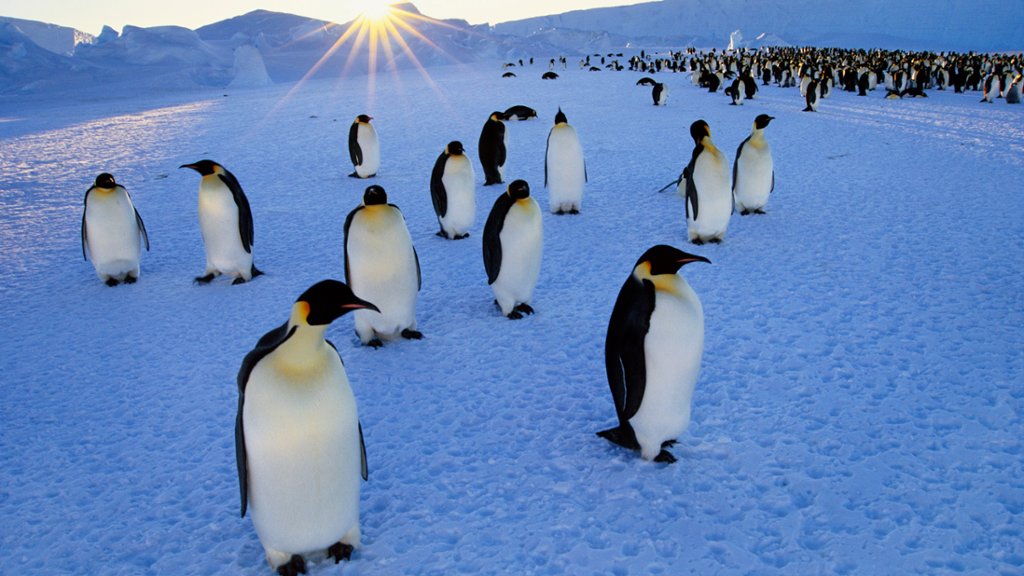
Emperor Penguins, Weddell Sea, Antarctica
Sign in to add this photo to your favorites and desktop wallpaper rotation.
Emperor Penguins are the largest species of penguins and live exclusively in Antarctica. They are known for their striking black and white plumage, and their unique breeding habits. The Weddell Sea is a region of the Southern Ocean that surrounds Antarctica, and it is home to a large population of Emperor Penguins. Emperor Penguins are well-adapted to the harsh climate of Antarctica. They have a thick layer of blubber and feathers that insulate them from the cold, and they can swim in the icy waters for extended periods of time. Emperor Penguins are also social animals, and they form large colonies during the breeding season. The breeding season for Emperor Penguins begins in March, when the sea ice begins to freeze. The penguins will then travel up to 100 miles inland to reach their breeding grounds. The female penguin lays a single egg, which is then incubated by the male while the female returns to the sea to feed. The male will incubate the egg for up to 65 days, during which time he will not eat anything. Once the chick hatches, the male and female will take turns feeding and caring for it. The chick will stay with its parents for several months before it is able to fend for itself. Emperor Penguins are known for their distinctive vocalizations, which they use to communicate with each other and locate their chicks. The Weddell Sea is an important breeding ground for Emperor Penguins, and it is also home to a diverse array of other wildlife, including seals, whales, and seabirds. However, the region is also under threat from climate change, which is causing the sea ice to melt and disrupting the delicate balance of the ecosystem. As a result, conservation efforts are underway to protect this unique and important region.